Rash on the Legs: Causes, Appearance, and When to Seek Care
Rashes on the legs can result from irritation, allergies, infections, or underlying medical issues. Noticing the color, pattern, and symptoms helps determine the cause and when to see a doctor.
Common Causes of Leg Rashes
- Eczema: Dry, itchy, scaly patches, often behind knees or on shins.
- Contact Dermatitis: Red, sometimes blistered rash from skin contact with allergens or irritants (soaps, plants, clothing dyes).
- Hives (Urticaria): Raised, itchy welts that appear suddenly and may move around.
- Folliculitis: Small red or white bumps around hair follicles, sometimes with pus.
- Dry Skin/Irritation: Flaky, rough patches, especially in cold weather or after shaving.
- Insect Bites: Localized red bumps, often itchy or swollen.
- Circulation or Medical Issues: Discolored patches (purple, brown, or red) on the shins or ankles, especially in people with diabetes or poor circulation.
What to Look For
- Color: Red, pink, brown, or purple can indicate different causes.
- Pattern: Is the rash patchy, spotty, or forming rings?
- Texture: Raised, flat, blistered, or scaly?
- Symptoms: Itching, pain, swelling, or fever?
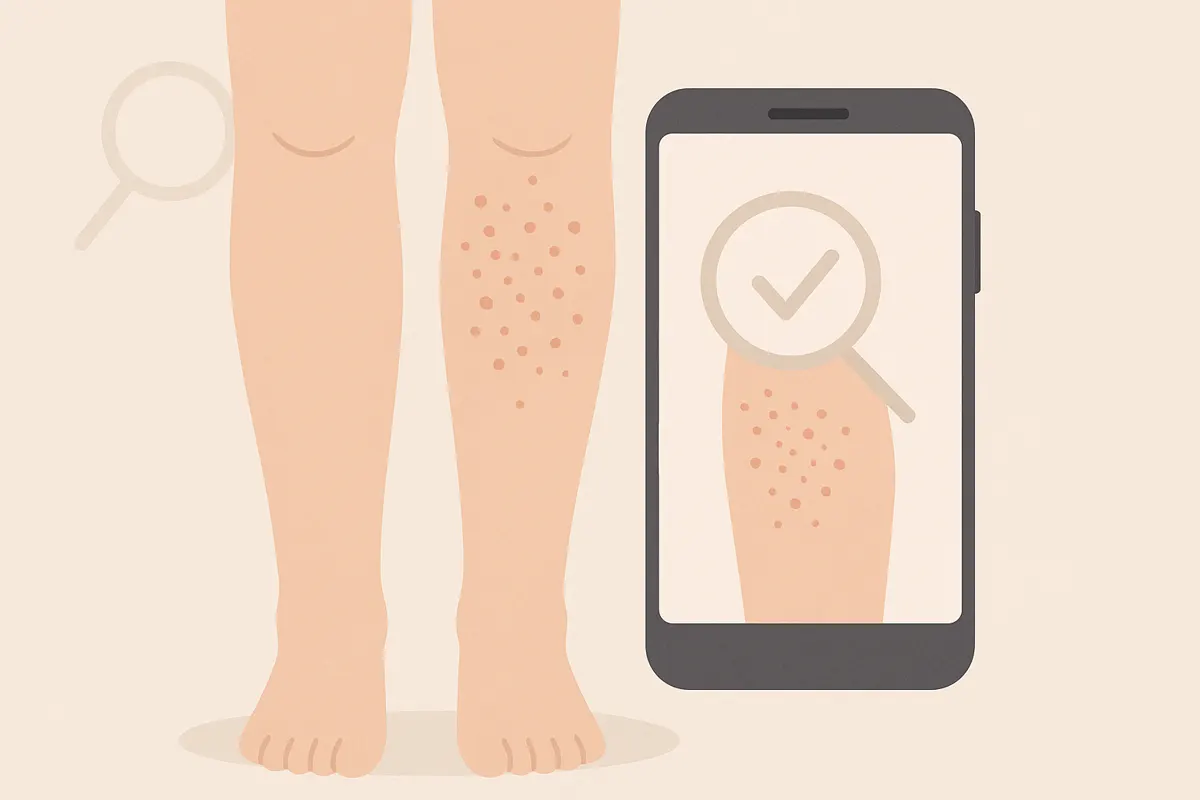
Take clear photos of your rash to track changes or to show your healthcare provider. You can also use Rash Detector to get a fast, private AI skin check for possible causes and information.
When to See a Doctor
- The rash is painful, spreading quickly, or blistering.
- It looks purple, bruise-like, or has swelling.
- You have a fever or feel generally unwell.
- The rash lasts more than a week or keeps coming back.
- You have diabetes, circulation problems, or other health conditions and develop new leg rashes.
If you notice any of these signs, seek medical advice promptly. Only a doctor or dermatologist can diagnose and recommend treatment for a rash.
Managing Mild Leg Rashes at Home
- Avoid scratching and keep the area clean and dry.
- Use gentle, fragrance-free moisturizers for dry or irritated skin.
- Try to identify and avoid triggers (new soaps, plants, fabrics).
- Apply cool compresses to relieve itching.
For mild, non-spreading rashes, these steps may help. If symptoms worsen or don’t improve, consult a healthcare provider.
Not sure what it is? Upload a photo and Rash Detector's AI suggests possible causes in seconds — free to start. It's informational, not a diagnosis; see a doctor for anything severe or persistent.
Try Rash DetectorFAQ
What causes a rash on the legs?
Common causes include eczema, contact dermatitis, hives, folliculitis, dry skin, insect bites, or circulation issues. Noting the rash's appearance helps narrow down the cause.
How can I tell if my leg rash is serious?
See a doctor if the rash is painful, spreading, purple, blistering, or comes with swelling or fever. These may signal a more serious condition.
Can I use Rash Detector to check my leg rash?
Yes, you can upload a photo to Rash Detector for an instant AI skin check and information about possible causes. Always confirm findings with a healthcare professional.
What should I do if my leg rash won't go away?
If your rash persists more than a week, worsens, or keeps coming back, consult your doctor or dermatologist for diagnosis and treatment.
How can I manage a mild rash on my legs at home?
Keep the area clean, moisturize with fragrance-free products, avoid irritants, and use cool compresses to relieve itching. See a doctor if symptoms persist or worsen.