Understanding Rash From Medication: Causes, Signs, and Next Steps
Learn why rashes can occur after taking medication, how to spot warning signs, and when to seek medical guidance. General info, not medical advice.
Understanding Rash From Medication: Causes, Signs, and Next Steps
Rashes are a common reaction to various medications, but their appearance and significance can vary widely. If you notice a rash after starting a new medication, it's important to understand what may be happening and when to contact a healthcare professional. This article provides general education about rashes related to medication use. For any concerns, always consult a qualified healthcare provider.
What Causes Medication-Related Rashes?
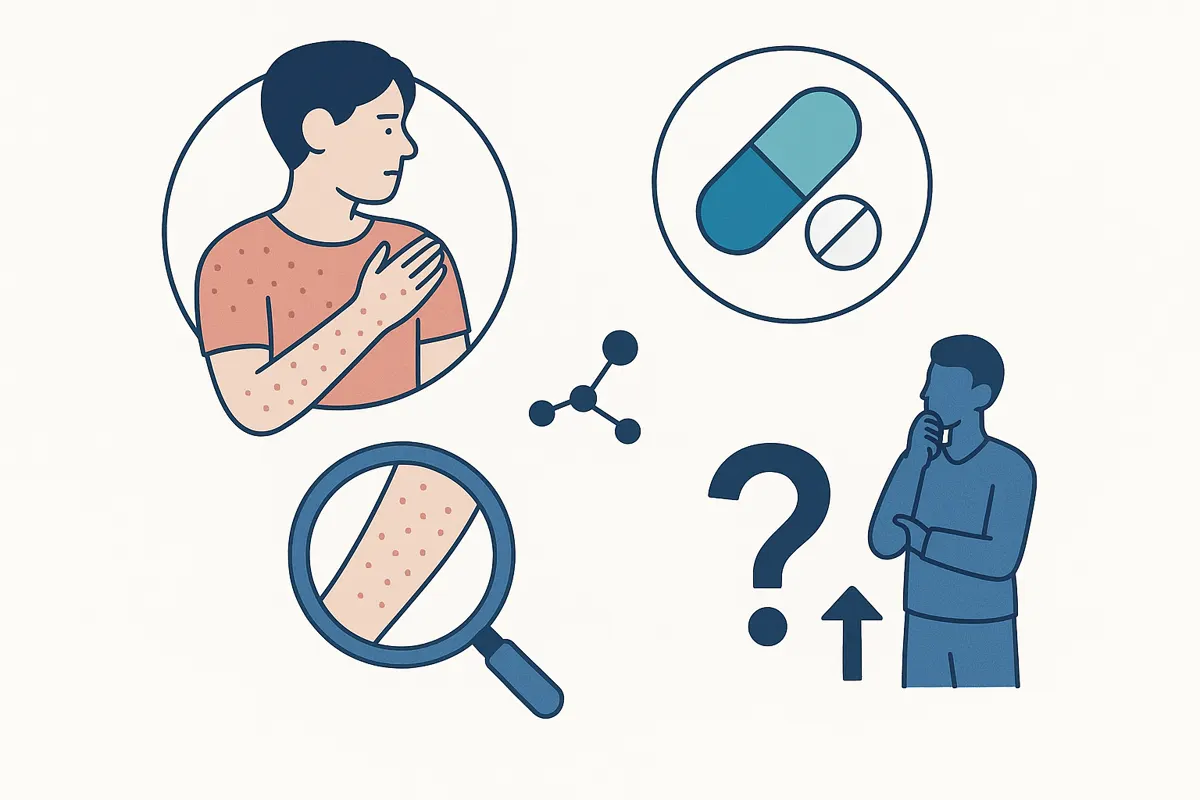
Many medications can trigger skin reactions, ranging from mild to severe. A rash from medication may be caused by:
- An allergic response, where the immune system reacts to the drug
- A side effect, which is not due to allergy but rather the drug’s general effects
- Sensitivity to sunlight (photosensitivity) after taking certain drugs
- Interactions between multiple medications
Some rashes appear quickly, while others may develop days or even weeks after starting a medication. The type and timing of the rash can give clues, but only a qualified healthcare provider can assess the cause accurately.
Recognizing Warning Signs
Medication-induced rashes can look different depending on the cause. They may be flat, raised, red, purple, or blistering. Common signs to watch for include:
- Red or pink spots that may itch
- Swelling or hives (raised, itchy welts)
- Blisters or peeling skin
- Rash spreading rapidly
- Fever or feeling unwell with a rash
Some rashes can be serious. Seek immediate medical attention if you notice difficulty breathing, swelling of the face or mouth, blistering, or if the rash is accompanied by high fever or pain.
What To Do If You Suspect a Medication Rash
If you develop a rash after starting a new medication, do not stop or change your medication without first consulting your healthcare provider. Take note of:
- When the rash appeared in relation to starting the medication
- Any other new symptoms
- All medications and supplements you are taking
Documenting these details can help your healthcare provider determine the cause and next steps. In some cases, apps like Rash Detector may help you track the appearance of your rash by allowing you to photograph and monitor changes over time, as well as provide general information about possible causes. However, these tools do not replace a professional evaluation.
When to Contact a Healthcare Professional
Always reach out to a qualified healthcare provider if you develop a new rash after taking medication, especially if the rash is severe, spreading, or associated with other symptoms. Early assessment is important to avoid potential complications.
Disclaimer: This article is for general educational purposes only and does not substitute for professional medical advice, diagnosis, or treatment. Always consult a healthcare professional for any concerns about your health.
Get a personalized read from Rash Detector.
Try Rash Detector